 +51 984 881 419
 +51 984 909 532
About Manu
One of Earth's last truly wild places — a complete vertical ecosystem from Andean cloud forest to Amazon lowland, protecting species found nowhere else on the planet.
The most biodiverse
place on Earth
Manu National Park, established in 1973, is a UNESCO World Heritage Site recognised for its unique and internationally acclaimed biodiversity. The Manu Biosphere encompasses Andean Mountain Cloud Forest, Tropical Lowland Forest, the Alto Madre de Dios and Manu river drainage systems — covering an area equivalent to half of Switzerland.
It is subdivided into a National Park and two adjacent zones for tourism and cultural subsistence. Within its heart remain indigenous peoples living untouched by modern society — including the Mashco Piro, one of the last uncontacted tribes on Earth.
Due to the low human population and traditional land use, animals in the park are largely unafraid of humans, allowing for extraordinary wildlife sightings at close range. Manu provides unmatched opportunities to observe species that elsewhere are almost impossible to find.
The journey into Manu itself is a spectacle not to be missed. The two-day trip from Cusco to the Reserve Zone entrance takes you through the Andes Mountains, past pre-Inca ruins, cloud forests and eventually to lush lowland rainforest. Unpaved roads wind past cascading waterfalls, deep gorges and precipices.
Manu has abundant wildlife including Jaguars, Tapirs, Anteaters, Black Caimans and Giant Otters. There are 15 species of monkeys, including the Pygmy Marmoset — the world's smallest monkey — and the nocturnal Night Monkey.
When to visit Manu
The short answer: any time. There is no season that is inherently better — both the dry and wet seasons offer unique and extraordinary experiences.
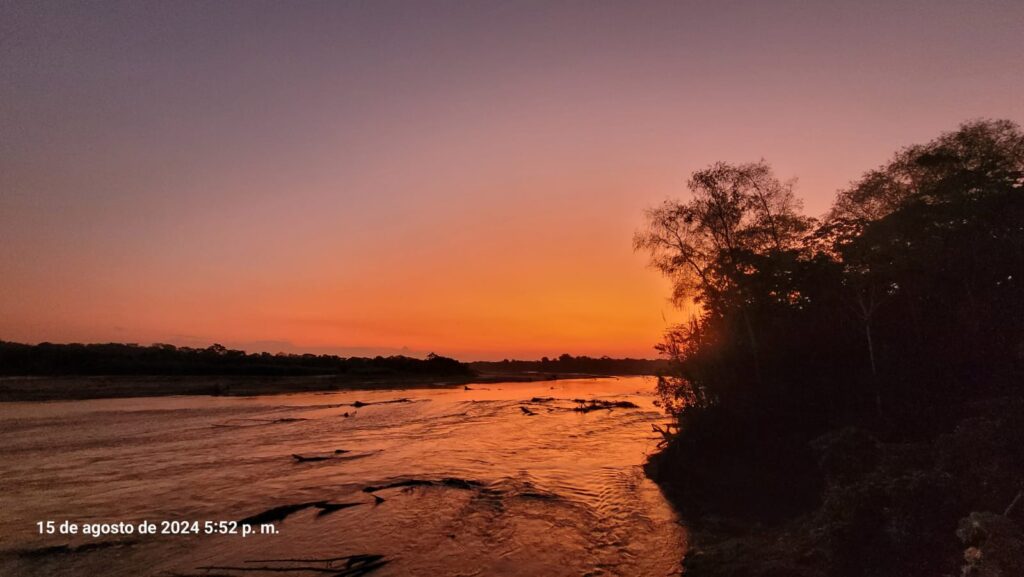
Water levels in the Madre de Dios River fluctuate significantly during this period. Wildlife is most visible — Jaguars patrol the exposed riverbanks, birds nest on sandy beaches, and Black Caimans bask in the sun. The cool "Friaje" winds from Patagonia arrive May–July, dropping temperatures and bringing animals to the water's edge.
The dry season is the best time for Jaguar sightings — the low water levels expose long sandy beaches where cats patrol at dawn and dusk.
Heavy rainfall peaks from early to mid-March. Many plant species bloom and fruit during this time, attracting pollinators, birds and primates to the riverbanks. River levels rise, reducing shallow areas and making boat journeys smoother. The rains often clear the skies, resulting in stunning blue vistas.
The spectacular thunderstorms can be a delight to witness from a boat. Animal activity increases after rainfall and birding is exceptional as flowers and fruit attract an extraordinary variety of species.
Five worlds in
one journey
The Manu Road descends from the Andean highlands to the Amazon basin, passing through five distinct ecosystems in a single day — one of the most dramatic ecological transects on Earth.
High-altitude grasslands at 3,500+ metres where dry air and temperatures fluctuate dramatically with sun exposure. From September to April, temperatures range from -9°C to 22°C, with occasional snow or hail. A transitional wooded thicket zone around 2,600m supports approximately 450 plant species, with annual rainfall of 500–1,000mm. Here you may encounter the Andean Fox, Gray-tailed Deer, and the elusive Andean Bear.
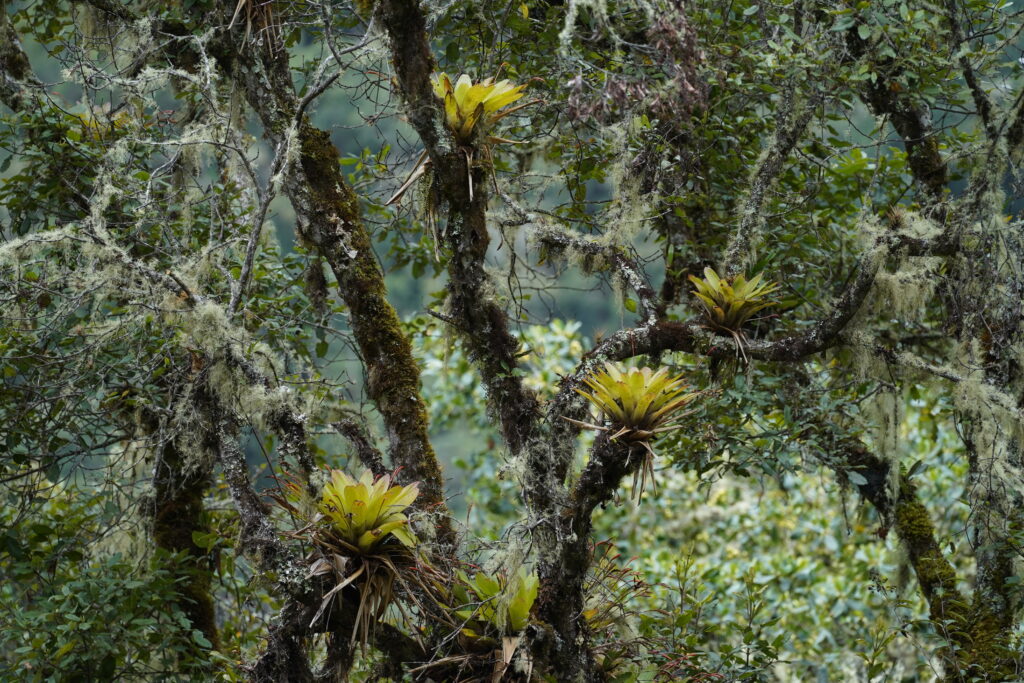
Trees reach 25 metres, adorned with orchids and ferns thriving on the walls of deep precipices. Characteristic broad-leaved Araceae and tree ferns dominate. The climate is cool and consistently shrouded in shadows and mist, creating a perpetually damp environment of extraordinary beauty. The transition between elfin forest and cloud forest is one of the most dramatic landscape changes on the Manu Road.
Also known as the Fog Forest — constant mist envelops this lush landscape where trees reach 30 metres, covered in orchids and ferns, with small streams and waterfalls throughout. Estimated to harbour at least 200 tree species with a density exceeding 700 trees per hectare. Temperatures range 16°C–25°C. This is the habitat of the Andean Cock-of-the-Rock lek, Golden-headed Quetzal, and dozens of hummingbird species.
The vast Amazonian plain — expansive lowland rainforest with high temperatures and rainfall year-round. The transition from foothills to true lowland is marked by the appearance of Giant Trees, epiphytes, lianas and diverse undergrowth. This zone is accessed via the Madre de Dios River by boat from Atalaya Port, and is where Bonanza Lodge is situated.
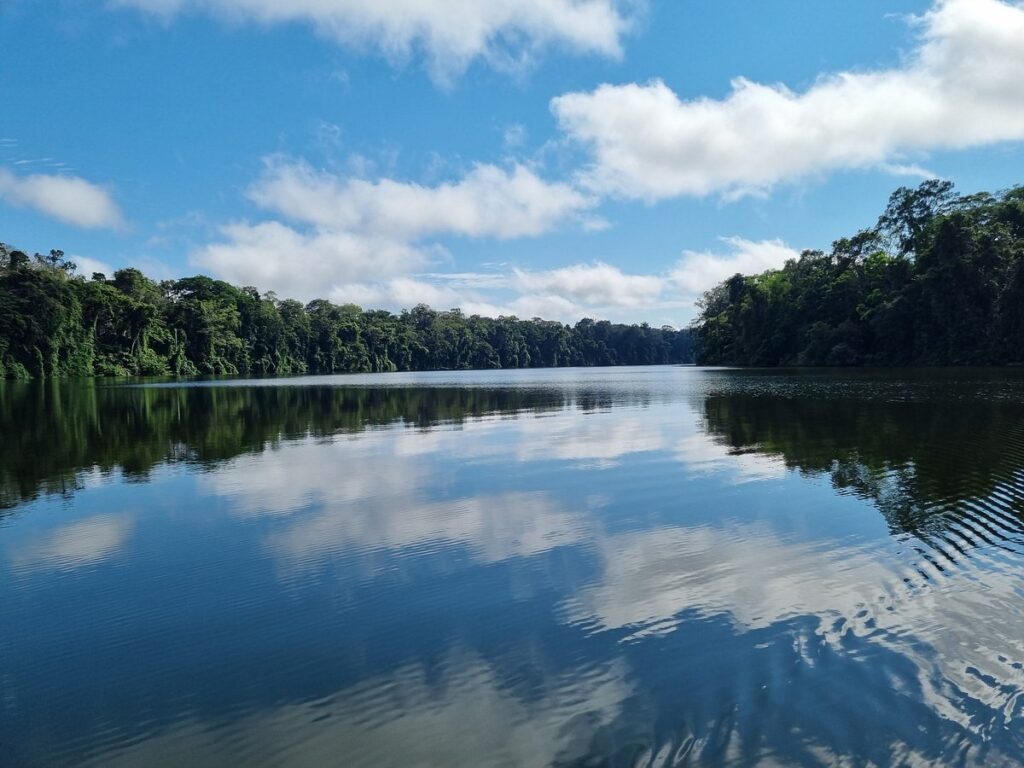
The deepest and most protected area — the Manu Reserve Zone, accessible only by SERNANP-licensed operators. Primary Terra Firme forest that has never been logged, home to Jaguar, Giant Otter, Tapir, Black Caiman and 15 species of primates. The oxbow lakes (cochas) of Salvador and Otorongo are among the best Giant Otter viewing sites in the Amazon.
Ready to experience Manu?
Every tour starts from Cusco and descends through all five ecosystems.